
element-2
element-1

Top Content Gap Analysis Benefits for Growing Your Website Traffic

content gap analysis benefits
Key Takeaway
  • Find the topics you are missing, and you will reach buyers who are looking for your solutions.
  • Updating older web pages costs far less than writing brand-new articles from scratch.
  • Studying rival domains shows the exact keywords behind their daily organic visits.
  • Thorough coverage of a subject tells modern search engines you know your field.
  • Answering specific customer questions builds trust and moves prospects closer to a purchase.

Publishing new articles every week without seeing any growth in organic traffic is a struggle for many growing businesses. You spend a great deal of time and budget on production, yet your search impressions barely move. Knowing the content gap analysis benefits can change how you build your online presence. Instead of guessing what your audience wants, you study real search demand and see what rivals do better.

Ahrefs confirms that search engines remain the number one source of brand discovery and research globally. To capture that search traffic, auditing your current content assets reveals exact topic holes that keep qualified visitors away from your domain. 

Core Content Gap Analysis Benefits for Modern Businesses

Simply publishing more often will not grow your website traffic by itself. Your web pages must line up with what customers actually need throughout every stage of the buying journey. By checking what your site is missing, you stop competing blindly and start targeting proven search demand.

  • Maximizing Existing Page Rankings

content optimization strategy

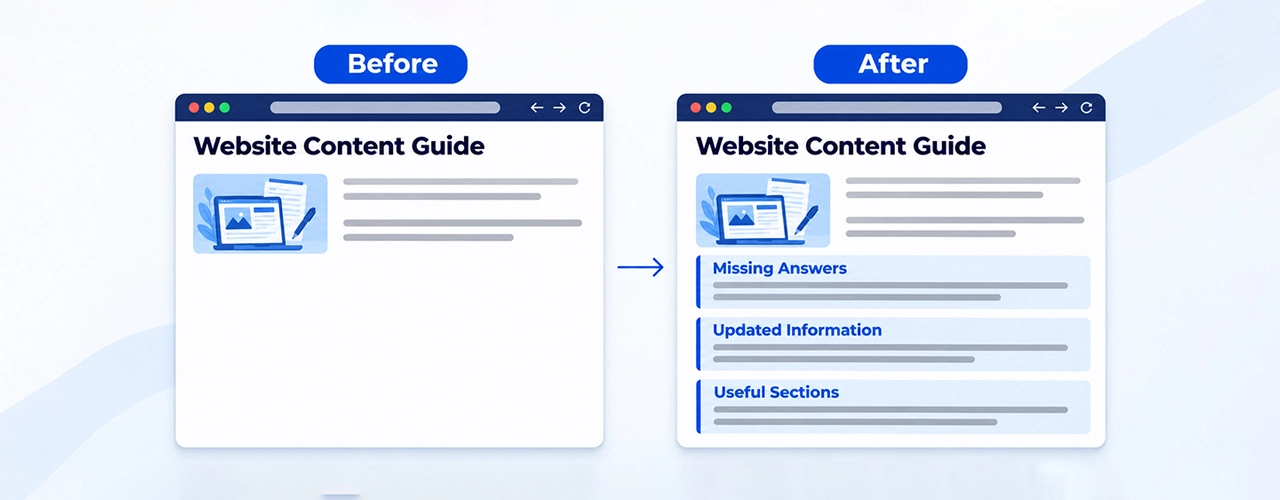
A smart content optimization strategy gives every page on your domain a clear business purpose. Older blog posts lose relevance quickly when nobody looks after them. Refreshing them with missing subtopics and updated market data brings that relevance back. Search engines reward pages that answer a query completely and thoroughly. As a result, your existing URLs can climb higher as a result, with no massive link-building campaign required.

  • Eliminating Content Cannibalization

You also protect your marketing budget from needless waste. Many companies spend thousands of dollars on creating duplicate articles that end up competing against their own pages. A close look at your content inventory prevents that internal competition. Your team can then focus on topics that bring fresh visitors into your sales funnel.
Ready to Find New Traffic Opportunities?

Explore content gaps, target valuable keywords, and grow your organic website traffic.

Discovering Hidden Opportunities Through Competitor Research

The competitors sitting above you in search results can sometimes show you where to grow next. They tend to cover specific subtopics or address customer concerns that your site skips. A close look at their best-performing articles reveals those gaps almost at once.

Capturing High-Intent Search Terms

When you run a detailed competitor gap analysis content review, you can spot the search terms that deliver steady traffic to other businesses in your niche. You may find that rivals rank strongly for comparison guides, pricing breakdowns, or technical troubleshooting tutorials, none of which your site offers. Closing those gaps places your brand squarely before buyers who are comparing their choices.

Audit Focus Area

What You Uncover

Direct Business Impact

Informational Queries

Early-stage questions buyers ask before choosing a vendor

Builds brand awareness and captures top-of-funnel leads

Comparison Terms

Side-by-side evaluations of features, costs, and alternatives

Captures high-intent prospects ready to make a decision

Legacy Page Decay

Older articles losing rankings due to outdated facts

Restores lost search traffic quickly with minimal effort

Subtopic Omissions

Missing definitions or steps inside existing comprehensive guides

Increases average time on page and lowers bounce rates

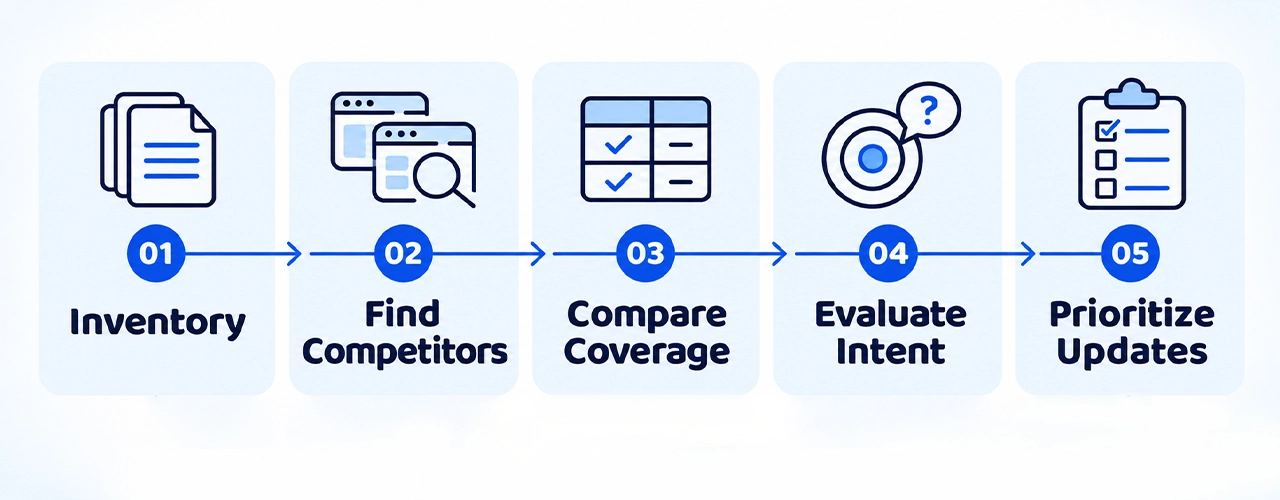
Practical Steps on How to Do a Content Gap Analysis

how to do a content gap analysis

Following a clear, repeatable workflow takes the guesswork out of running a structured audit for you.

  • Map Your Current Content Inventory

Begin by exporting every live URL you have, with its primary target terms, current rankings, and monthly organic visits. That baseline clearly tells you where your domain already holds real authority.

  • Identify Your True Search Competitors

Look beyond your traditional offline rivals. List the domains that consistently hold the top three positions for your core industry terms.

  • Compare Keyword Coverage

Use reliable search analytics software to cross-reference your domain against those top competitors. Filter the results for valuable search terms. Look for terms where rivals rank on page one, and your site never shows up.

  • Evaluate Search Intent and Buyer Value

Check the missing terms carefully, since some come from casual browsers and others from serious buyers. Bring related queries together, and a single authoritative page can handle the entire topic.

  • Prioritize and Execute Updates

Start by adding missing sections to existing pages that sit on the second page of results. Once those quick wins are live, assign new articles to cover entirely new subject areas.


Common Content Gap Analysis Mistakes to Avoid

Finding keywords that your competitors rank for is relatively easy. Knowing which ones are actually worth targeting is where things get tricky. A lot of websites end up publishing more articles without seeing much improvement in traffic. This usually happens when the research is not translated into the right content decisions.

Here are a few mistakes that can make your content gap analysis less effective.

  • Choosing keywords that don’t fit your business: You may come across a fascinating keyword from a competitor’s report, but evaluate if your target audience would be searching for it. If it is only marginally relevant to your business, you have no good reason to target it.
  • Looking only at search numbers: A keyword with a high monthly search volume may attract a large number of visitors, but this does not guaranty that those people will be interested in your services. A smaller and more precise keyword may be worth pursuing since it reaches the intended demographic.
  • Writing new blogs without checking old ones: Take a look at your existing articles before planning another one. You might already have a page on the subject that needs better information, a few additional sections, or updated examples. There is no point in creating another page if both are going to cover the same thing.
  • Trying to match every competitor’s article: Reading competitor blogs can give you a good idea of what is missing from your website. However, writing the same things in slightly different words won’t make your article stand out. Think about what additional information you can offer that readers won’t easily find elsewhere.
  • Ignoring what people actually want to find: A keyword may look relevant, but the search results can tell a different story. Before writing, check the pages Google is showing. If people are looking for a comparison and you publish a basic guide, your content may not be the right match.
  • Leaving related blogs without links: If you’ve written about keyword research, SEO audits, or content optimization, provide links wherever they make sense. Readers who want to learn more should be able to find important material easily.
  • Forgetting to check article performance: Don’t just publish a blog and then forget about it. From time to time, go to Google Search Console and have a look at the search queries that are producing impressions and clicks. If a page is not responding the way you thought it would, review it and see what can be improved.

The biggest mistake is treating content gap analysis as a task of finding more keywords and publishing more blogs. The real work is deciding which topics deserve attention and making sure every new or updated page has a clear purpose.

Maximizing Return on Investment With an SEO Content Gap Analysis

Every piece of content on your website should act as a long-term digital asset that generates leads over time. A regular SEO content gap analysis keeps your editorial calendar tied to measurable revenue goals instead of vanity metrics. It also shows which topics attract decision-makers and which ones bring only low-value traffic.

  • Strengthening Internal Linking Architecture

A keyword gap in SEO does more than expose missing topics. It opens the door to a better internal linking structure. New supporting articles, for example, can point directly to your primary service pages and share their authority across the entire domain. Crawlers move through your site with ease, so future updates are indexed quickly.

  • Improving Visitor Retention and Trust

Customer retention rises with your search visibility, and the reason is simple. Prospects who find clear, accurate answers to their exact problems stay longer and explore far more pages. Every useful answer pulls a first-time visitor a little closer to becoming a loyal client who trusts your expertise. Leaders see these content gap analysis benefits in the numbers, which makes budget talks easier.

Building Long-Term Organic Authority With Data-Driven Insights

Search rankings reward the sites that keep working. Measure your results, refine weak pages, and expand where demand is growing. Customer habits and algorithms never sit still, so review quarterly. These content gap analysis benefits then keep your traffic climbing steadily.

At TechHaz, we deliver professional digital solutions and strategic digital marketing that help businesses build a strong online presence. Pair a content optimization strategy with regular market research, and your website becomes a reliable engine for qualified inquiries..

Ready to grow your organic traffic? Contact our team today to start your custom audit.

FAQ's

Is SEO still relevant with AI search?

Yes. Traditional SEO matters even today because it helps in getting traffic and ranking a website. AI search engine optimization, on the other hand, just gives one more way for customers to find businesses.

Yes. AI tools look for content worth citing. Therefore, small businesses can earn AI visibility with expert guides, local research, and industry knowledge their competitors haven’t shared yet.

Most of this can be tracked with search tracking tools. Look at featured snippet wins, voice search placements, and organic click-through rates each month.

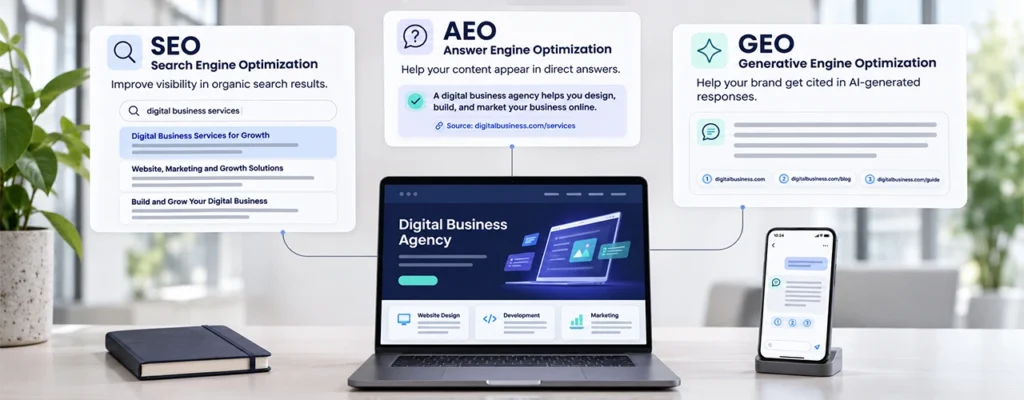
Each strategy pulls in traffic in its own way. SEO earns organic clicks from search results. AEO puts your answer at the top of the page. GEO can lead to AI referrals and brand mentions.

No. You don’t need a second page. Content optimization for ChatGPT or any AI model follows the usual rules. Get the facts right, keep the structure clear, and give the reader something useful. One authoritative page can reach people, search bots, and AI engines.