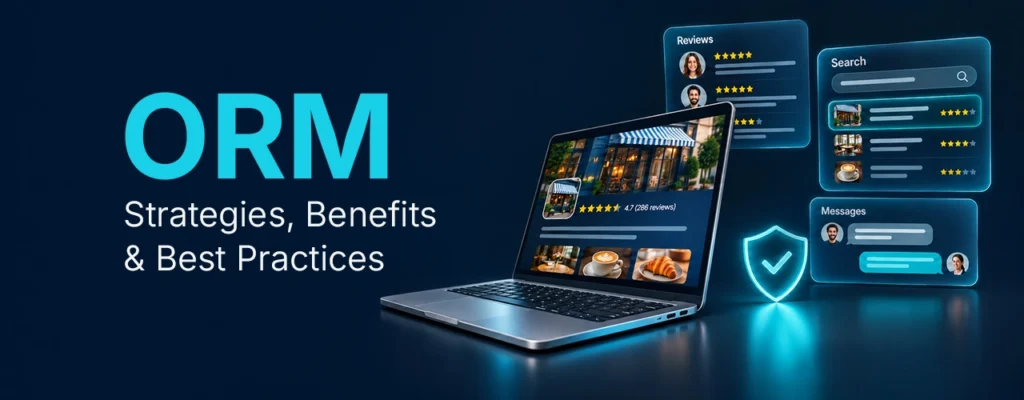
Online Reputation Management: Strategies, Benefits & Best Practices
Key Takeaway
- Build customer trust with consistent communication.
- Monitor customer feedback and brand mentions regularly.
- Respond to customer complaints quickly.
- Use customer feedback to improve your products and services.
- Maintain accurate business information across platforms.
It is very important for any business owner to maintain a good reputation. This reputation helps buyers make decisions regarding the purchase of goods/services of the business. Buyers and businesses look at the reviews online and information available online about the business before buying something from the business. This makes it even more imperative for any business to maintain its reputation.
The business owners need to not only focus on gathering positive reviews but also learn about what their customers talk about online and search for them online. This blog focuses on the benefits of online reputation management and also explains the correct strategy for it.
What is Online Reputation Management (ORM)?
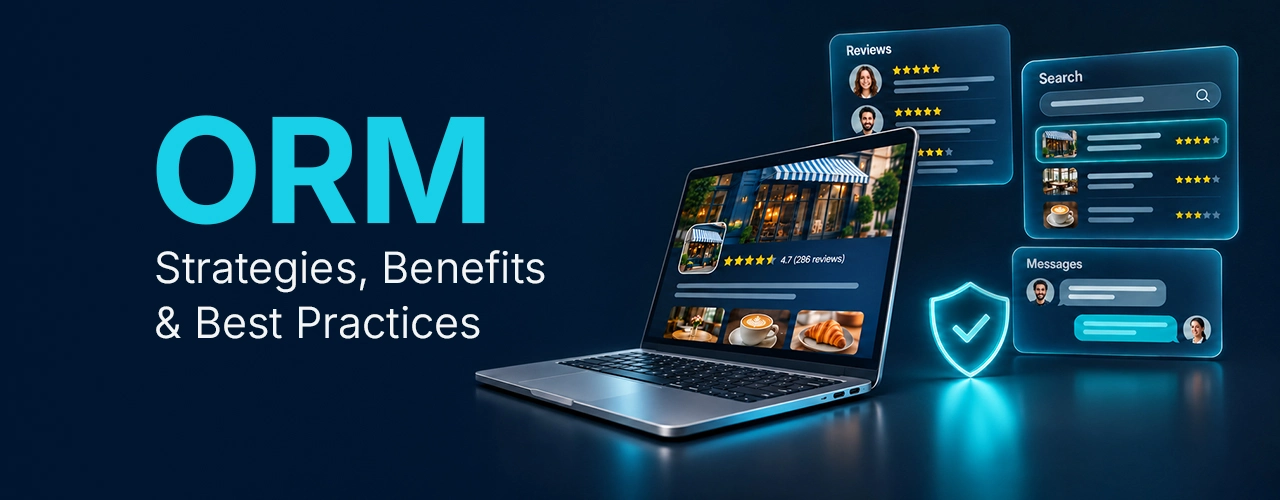
Online reputation management or ORM, is a practice that enables business owners to monitor the perception of the business online. ORM involves monitoring the reviews left by customers, replying to the reviews and information provided by them and social media interactions. ORM involves updating the right information about the business online so that it comes up when searched for online.
Good communication and proper customer interaction help build trust. Instead of deleting the negative comments, dealing with the actual complaints of the customers is the secret to effective reputation management.
Build and Protect Your Online Reputation
Manage your online image, build credibility, and turn customer trust into business growth.
Why is Online Reputation Management Important for Businesses?
Potential customers conduct online research about a business before reaching out to its sales team. The ratings, reviews, search results, and public reactions often create an initial opinion. It doesn’t even give the company a chance to communicate its value. Poor online reputation can easily trigger doubts and decrease the chances of attracting new customers.
Business owners can benefit from reputation management as it allows them to detect customer concerns, mitigate risks and fix them early. In addition, it enables them to learn about service shortcomings and customer expectations.
What are the Benefits of Online Reputation Management?
A positive reputation creates a positive online perception of a business. When people find consistent information and authentic customer feedback across digital platforms, potential customers are more likely to choose that company.
As shown by the 2026 Local Consumer Review Survey by BrightLocal, 85% of customers choose a company after they read a positive customer review. Therefore, as part of a company’s broader growth strategy, feedback management must be implemented.
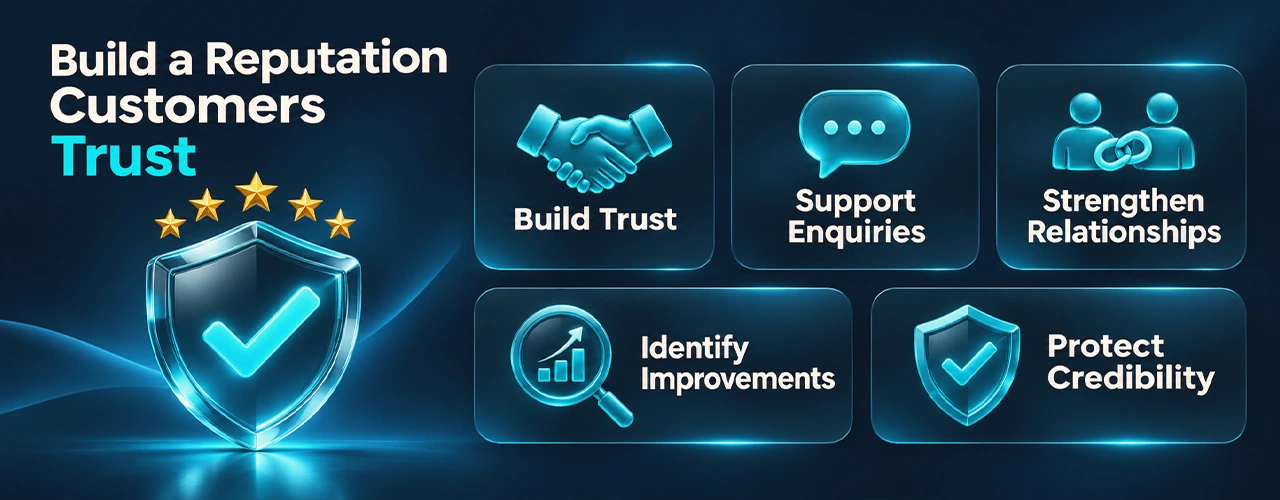
1. Builds Trust And Credibility
In case potential clients read positive and sincere feedback and witness the way a company responds, they feel relaxed and might call up for a quote or make a purchase.
2. Supports Sales And Lead Generation
Online consumers are more willing to interact with a company that has impressive reviews than with a company that has none. With the help of reviews and the company’s responses, customers become more likely to ask questions.
3. Strengthens Customer Relationships
Customers can determine how customer-oriented the company is by reading its response to customers’ complaints. When a company responds in an appropriate way to an unhappy customer, it builds customers’ trust.
4. Helps Spot Areas For Improvement
Customer reviews provide valuable information on issues that might not be captured in reports. For example, comments on a late delivery or a problem with product quality could help business management to realize that they need to make some operational adjustments to meet the needs of their customers.
5. Protects Brand Credibility
Effective monitoring helps businesses catch any misleading information, unresolved complaints, and unexpected changes in how people view the business. Quick actions can be taken to stop avoidable losses.
Managing a reputation well delivers value far beyond how customers see a company. It provides market insights and business performance feedback for those who are in a position to make business decisions.

7 Effective Online Reputation Management Strategies for Businesses
Developing a good reputation for a business does not happen overnight; it takes time and requires the use of proper reputation management strategies. Here are some effective techniques that businesses can use to improve their credibility and build good relations with their customers.
1. Monitor Online Mentions Regularly
Pay attention to opinions about the company that can be voiced, other than what people post online. Setting Google alerts for your company name, products, services, and top executives can help you track the issues before they are highlighted by others.
2. Respond To Reviews Professionally
If you received a positive review, be sure to thank the person for the feedback. If the review contains a complaint or any issues regarding your services, try to answer it professionally. Thank them for their feedback, come up with a resolution, and comment on your further plans regarding the problem.
3. Encourage Genuine Customer Feedback
Create ways to let your happy clients tell the world how great you are. After a job is done, or a sale is made, send a feedback request. Don’t push it or offer a reward to incentivize a positive review, and absolutely never pressure them to give you feedback.
4. Maintain Consistent Business Information
Review your name, address, phone number, and operating hours in all the listings of your business. If your information is incorrect, potential clients can be frustrated, and there can be confusion. Delegate someone in your team to review this information, especially when you have business changes.
5. Publish Useful and Credible Content
Your social media and website are places to post projects, client feedback, industry insights, and step-by-step tutorials to teach potential clients how your business operates. The content that you post on your website and social media shows your expertise to potential clients.
6. Address Complaints Before They Escalate
When it comes to responding to complaints in the public eye, you want to be proactive. That means having a plan in place to handle public complaints and keeping track of recurring complaints. Don’t promise to address a problem you don’t have the capacity to handle. For more serious complaints, refer them to the appropriate department.
7. Track Reputation Performance
You will need to regularly measure and track your metrics in the form of review ratings, response times, customer sentiments, and complaints. Reviewing these metrics will allow your teams to determine whether their customer experience and brand perception initiatives are making an impact.
Make reputation management a core element of your day-to-day operations by designing and maintaining a consistent process that everyone understands.
Best Practices for Managing Your Online Reputation
Proper reputation management relies on firm actions, clarity of roles and proper communication with customers. Companies should develop guidelines that make it easier for their staff to react to client feedback.
Set Clear Response Guidelines
There should be a clear process to deal with clients’ reviews, complaints, and comments. Many businesses choose a 24 to 48-hour timeframe as an internal standard, but urgent problems may require faster action.
Professional and Transparent Communication
Avoid conflicts with clients and dismissing negative experiences. Instead, it is better to accept their concern and provide them with the action steps that will be taken as well as possible solutions.
Avoid Fake Reviews and Feedback
You should never indulge in buying reviews, faking customer accounts or offering rewards for good reviews. Such methods are likely to undermine confidence and violate the rules of the chosen platform. Instead, it is better to get honest feedback from the real audience.
Protect Customer Information
Employees should never share order numbers, personal information, financial details, or private correspondence in public replies. They can discuss private issues through secure means of communication only with the relevant team involved.
Review Performance Regularly
Take time every month to check review dynamics, response speed, customer sentiment, and frequent concerns. Inform sales and marketing teams about the conclusions drawn from your analysis so that the information can be used for improving customer service.
DIY Online Reputation Management Vs. Hiring a Professional Agency
A business can monitor its online reputation by tracking reviews, replying to customers’ comments, and updating listings. This might work for small businesses with less activity online and staff who can commit to doing this. However, as the business grows, it may be hard to manage multiple platforms, customer issues, and social mentions about the company. A professional digital marketing company has a lot of experience, special monitoring tools, and a systematic process for responding to different issues. It will also help with content creation and being visible in search engines. The choice will depend on one’s budget and resources, the size of the business and the amount of risk that should be managed correctly.
Conclusion
An online reputation requires a lot of effort to build, honesty and understanding of what customers expect from a business. Businesses that pay attention to what people say, that answer the queries of customers and update their information are more likely to get customers’ trust and preserve their reputation. Reputations should be treated as a corporate priority, and not just a tool for mitigating negative feedback.
FAQ's
How Do You Manage Your Online Reputation?
You should analyze reviews online, keep track of mentions, respond with professionalism and take measures to rectify false statements and produce content to build credibility.
How To Do Online Reputation Management For A Small Business?
If you want to work on online reputation management, you need to create online business accounts, encourage clients to write reviews, deal with negative feedback and monitor mentions on social media.
What Are The Ways Of Managing Online Reputation?
The best ways are handling reviews that are negative, posting solutions to complaints, rectifying incorrect information posted online, and sharing positive case studies.
How Long Will It Take To Boost Your Online Reputation?
The time required for reputation management will depend on both the customer base and service quality. Improvement is possible in several months, but it requires hard work and consistency.
Should A Business Hire an Online Reputation Management Agency?
There may be a need for an online reputation management agency for businesses that have an online presence in multiple channels and have a customer base that is loyal.
Let’s Talk About Your Project
Recent Blog
-
Top Content Gap Analysis Benefits for Growing Your Website Traffic -
AEO vs GEO vs SEO: Which Strategy Is Best for Your Business? -
How to Find DoFollow Backlinks Using Free SEO Tools -
Inventory Management Software in Dubai: Features, Benefits & Costs -
Online Reputation Management: Strategies, Benefits & Best Practices